
- Index
- Certification
- Composition
- .999 Silver (10)
- .9999 Silver (28)
- 99.99% Pure Silver (29)
- Aluminum (18)
- Bi-metallic (6)
- Billon (11)
- Bronze (56)
- Copper (12)
- Gold (37)
- Gold And Silver (9)
- Gold, Silver (9)
- Nickel (10)
- Pure Silver (14)
- Silver (3941)
- Silver 925 / 1000 (13)
- Silver 999 / 1000 (10)
- Silver And Gold (5)
- Silver Certificate (7)
- Silver With Opal (5)
- Varies (6)
- ... (2132)
- Currency
- Denomination
- Km Number
- Year
Ancient India 5 Silver Coins Shatamana & Mauryan Empire Karshapana 500-187 BC
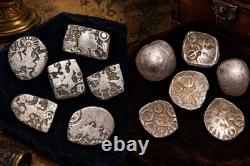
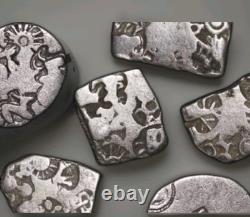
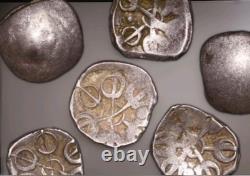


ANCIENT INDIA: Five Silver Coins - Mauryan Empire & Achaemenid-Era Taxila. Own a fascinating piece of ancient Asian history with this five-coin collection of ancient Indian silver punch-marked coinage, featuring two Shatamana coins from ancient Taxila and three Karshapana coins associated with the mighty Mauryan Empire. These distinctive coins offer a glimpse into early Indian commerce, powerful empires, and a monetary tradition that developed its own unique identity in the ancient world. 2 Silver Shatamana Coins - Ancient Taxila, Gandhara Satrap, Achaemenid Persian period, circa 500-300 BCE. Featuring the distinctive six-armed Gandharan punch-marked symbol.
3 Silver Karshapana Coins - Mauryan Empire, circa 321-187 BCE. Featuring multiple ancient symbols and sometimes animal motifs, with minute punch marks on the reverse. A History Spanning Powerful Empires.The Shatamana coins are associated with Taxila, an important ancient trading center in the northwestern Indian subcontinent. Conquered by Persian ruler Darius I around 518 BCE, the region later encountered Alexander the Great's expanding empire. Despite these changing rulers, Taxila maintained a distinctive local coinage tradition reflecting the needs and preferences of Indian merchants. The Karshapana coins represent the remarkable Mauryan period, when rulers including Chandragupta Maurya and Ashoka presided over an empire that encompassed much of the Indian subcontinent.
Ashoka's famous edicts promoted moral conduct and Buddhist-influenced Dharma, leaving a lasting legacy across South Asia. These coins are remarkable survivors from a time when distinctive pieces of silver helped facilitate trade across an evolving ancient world.Their irregular shapes, varied symbols, and time-worn surfaces are part of their historical character. A wonderful opportunity to explore the origins of Indian coinage and add five fascinating ancient silver coins to your collection.
Please note ancient coins naturally exhibit variations in shape, surfaces, and strike characteristics.